Transforming Construction: The Rise of Cloud Technology
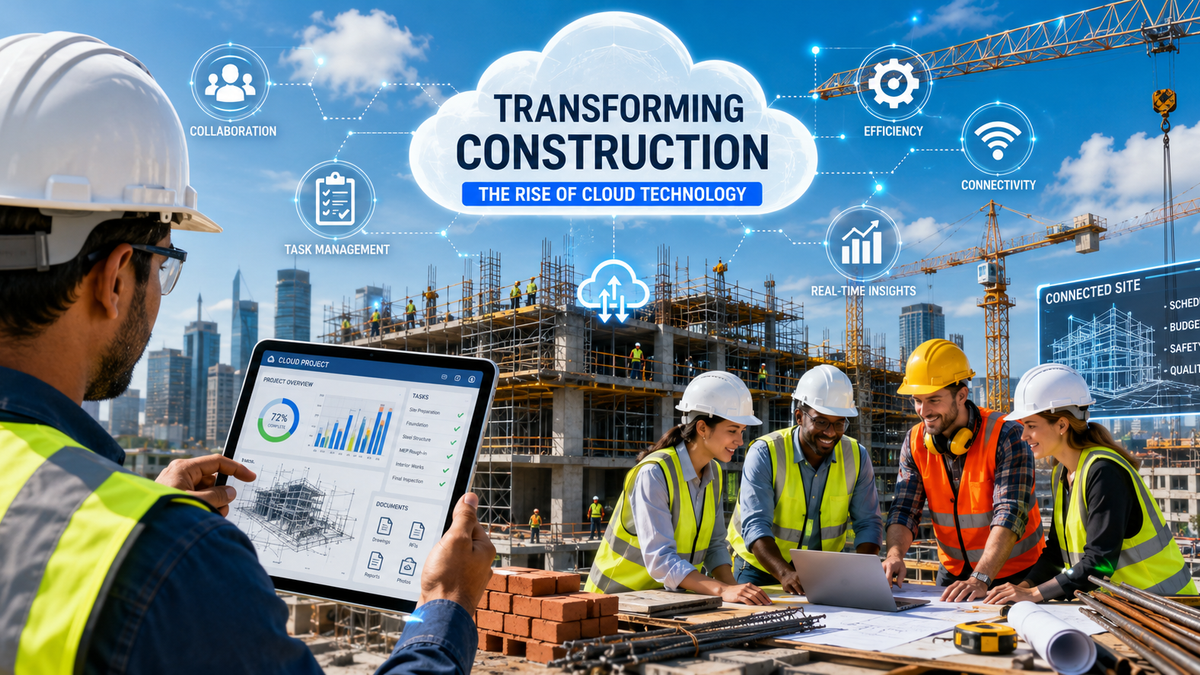
How Cloud Technology Is Reshaping Modern Construction
The construction industry is undergoing a major digital shift. What was once a paper-heavy, fragmented, and manually coordinated industry is now rapidly evolving into a connected, cloud-driven ecosystem.
Cloud technology is no longer limited to file storage or basic collaboration tools. Today, it plays a central role in project execution, document control, compliance tracking, and operational coordination across construction teams.
As projects become larger and more complex, construction firms are increasingly adopting cloud-based systems to improve visibility, reduce delays, and strengthen collaboration across stakeholders.
The Shift Toward Cloud-Based Construction Systems
Across the industry, digital transformation is accelerating as companies look for better ways to manage projects and resources.
Key trends include:
- A growing shift toward centralized, cloud-based project management systems
- Increased demand for real-time collaboration across distributed teams
- Stronger focus on compliance, documentation accuracy, and audit readiness
- Higher adoption of workflow automation to reduce administrative workload
These changes reflect a clear direction: construction firms are moving away from disconnected tools toward integrated digital ecosystems.
Why Cloud Systems Matter in Construction
Construction projects involve multiple stakeholders, large volumes of documentation, and strict timelines. Without structured systems, inefficiencies quickly build up.
Common challenges include:
- Disorganized project documentation
- Delays in approvals and communication
- Version control issues across teams
- Limited visibility into project progress
- Inefficient resource coordination
Cloud-based systems address these challenges by centralizing information and improving workflow structure.
GLXY’s Approach to Construction Operations
GLXY Software Solutions provides cloud-based project management and workflow systems designed to support construction and engineering operations.
These systems help organizations improve coordination, streamline documentation, and enhance project visibility across teams.
You can explore GLXY’s construction-focused solution here:
https://www.glxysoftwaresolutions.com/construction-project-management
Key Benefits of Cloud-Based Construction Systems
1. Centralized Project Information
All project documents, updates, and communications are stored in one structured system, reducing fragmentation and confusion.
2. Real-Time Collaboration
Teams can access and update project information instantly, improving coordination between field teams, engineers, and project managers.
3. Improved Document Control
Cloud systems help maintain version accuracy, ensuring that all stakeholders are working from the most up-to-date information.
4. Faster Decision-Making
With real-time data access, project leaders can make quicker and more informed decisions, reducing delays and bottlenecks.
5. Enhanced Workflow Efficiency
Automated processes reduce manual administrative tasks such as approvals, reporting, and document routing.
Strengthening Security and Compliance
Construction projects often involve sensitive financial, operational, and engineering data. Cloud-based systems enhance security through:
- Role-based access controls
- Encrypted data storage
- Audit trails for document activity
- Secure cloud infrastructure
This helps organizations maintain compliance and reduce operational risk.
Improving Project Execution and Visibility
One of the biggest advantages of cloud-based systems is improved visibility across all project stages. Organizations benefit from:
- Real-time progress tracking
- Clear task accountability
- Better coordination across teams
- Reduced communication gaps
This leads to smoother project execution and fewer delays.
Supporting Scalable Construction Operations
As construction firms grow, managing multiple projects becomes increasingly complex. Cloud-based systems allow organizations to:
- Scale operations across multiple sites
- Standardize workflows across teams
- Maintain consistency in documentation and reporting
- Adapt to changing project demands
This ensures long-term operational stability and efficiency.
The Future of Construction Is Connected and Digital
The construction industry is moving toward fully integrated, data-driven operations. Companies that adopt cloud-based systems today are positioning themselves for stronger performance in the future.
The next generation of construction operations will be defined by:
- Real-time collaboration
- Automated workflows
- Centralized data systems
- Predictive project insights
Organizations that embrace this shift will be better equipped to deliver projects faster, safer, and more efficiently.
Conclusion
Cloud technology is no longer optional in construction—it is becoming a core requirement for operational success.
By adopting structured systems like those provided by GLXY Software Solutions, construction organizations can improve collaboration, strengthen project control, and increase overall efficiency.
In a fast-moving industry where timing and accuracy are critical, cloud-based construction systems are essential for staying competitive and scalable.