Why Current Construction Documents are Crucial for Success
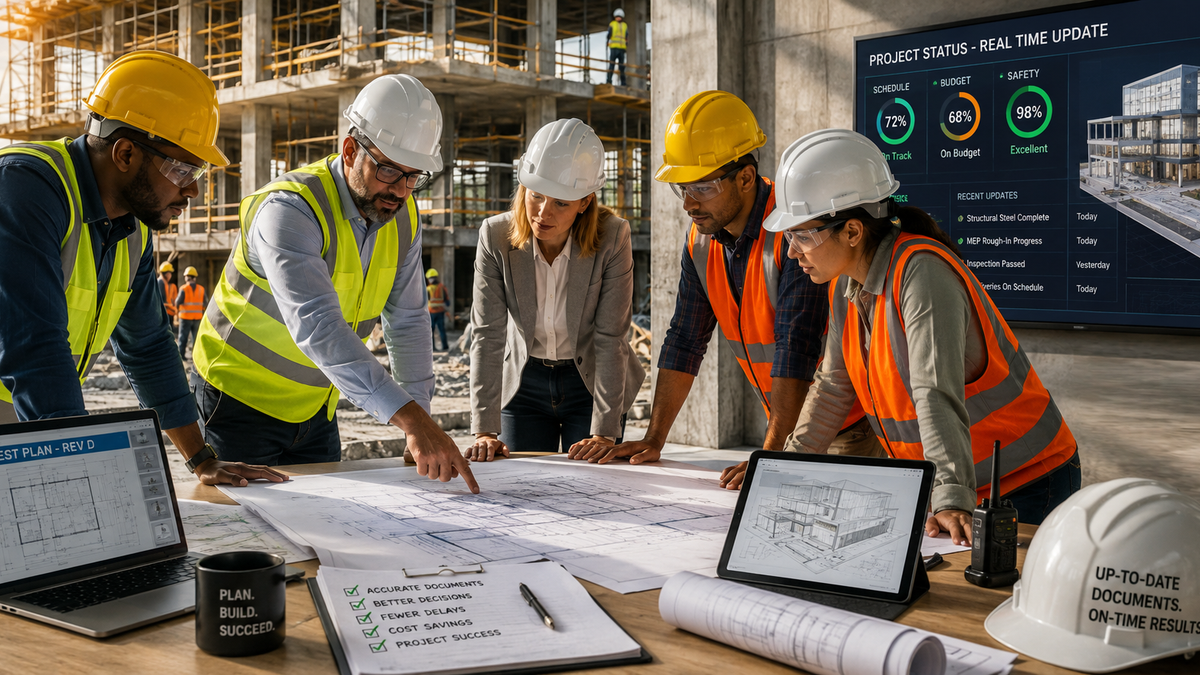
Having the Latest and Greatest: Why Up-to-Date Construction Documents Matter
Keeping Construction Teams on the Same Page
Few things are more frustrating on a construction site than discovering that the plans in your hands no longer match what you see in front of you.
A drawing may indicate that a room is a certain size, a wall should be in a specific location, or a particular detail should be installed one way—but the actual conditions on site tell a different story. When outdated plans, drawings, or project information are being used, even a small discrepancy can quickly turn into a costly problem.
For general contractors, subcontractors, engineers, architects, and project managers, having access to current project information is essential for keeping work moving efficiently.
The Cost of Outdated Construction Documents
Construction projects depend on accurate information. Teams make decisions based on drawings, specifications, schedules, change orders, and other project documentation.
When outdated information is being used, the consequences can include:
- Rework and unnecessary labor costs
- Material waste and additional expenses
- Delays caused by incorrect information
- Miscommunication between project stakeholders
- Difficulty coordinating field and office teams
- Increased risk of disputes and project issues
An outdated drawing may seem like a small administrative problem, but its impact can extend throughout an entire project.
For example, if a subcontractor begins work using an outdated drawing, another trade may have to undo or modify completed work once the updated information is discovered. This creates additional labor, disrupts schedules, and can affect the project's overall budget.
Moving Beyond Paper-Based Project Communication
Paper plans and printed documents have long been a part of construction, but they can become difficult to manage as projects evolve.
Drawings may be revised multiple times throughout a project. Addendums, change orders, specifications, and other updates can introduce additional information that teams need to track.
When different team members are working from different versions of a document, it becomes increasingly difficult to determine which information is current.
Cloud-based project management systems can help construction organizations create a more organized approach to managing project information.
Improving Construction Project Coordination
GLXY Software Solutions provides construction project management solutions designed to help teams improve project tracking, workflow coordination, and visibility.
GLXY Construction Project Management
A structured project management system can help teams keep important project information organized and accessible, making it easier for project managers and stakeholders to coordinate work.
Instead of relying solely on scattered emails, paper documents, and disconnected spreadsheets, teams can use centralized project workflows to improve communication and project visibility.
Keeping Project Teams Aligned
Construction projects involve many people working toward the same objective. Project managers, contractors, subcontractors, engineers, architects, and field personnel all need access to accurate information to perform their responsibilities effectively.
A centralized approach can help teams:
- Improve project communication
- Track project activities and updates
- Coordinate tasks across teams
- Maintain better visibility into project progress
- Reduce reliance on disconnected processes
Better coordination means fewer opportunities for important updates to get lost between the field and the office.
Improving Project Visibility with Structured Tracking
In addition to construction project management solutions, GLXY offers the Pulse Point Project Tracker, which provides a structured way to track projects, tasks, and progress.
Project tracking can give teams greater visibility into what needs to be completed, what is currently in progress, and where attention may be required.
When project information is organized and accessible, teams can make decisions with greater confidence and respond more quickly when project conditions change.
Supporting Better Decisions in the Field
Construction teams frequently make decisions under tight deadlines. Field personnel may need to verify project details, coordinate with other trades, or determine how a change affects ongoing work.
Having organized and current project information available helps reduce the likelihood of decisions being based on outdated information.
This is particularly important when projects involve frequent revisions. Instead of treating each document update as an isolated event, teams can incorporate project updates into a more structured workflow.
Reducing Rework and Improving Efficiency
One of the biggest advantages of better project information management is the potential to reduce avoidable rework.
When teams have better visibility into project information and workflows, they can identify issues earlier, coordinate changes more effectively, and reduce the likelihood of work being performed based on incorrect information.
This can contribute to:
- Fewer avoidable mistakes
- Better coordination between trades
- More efficient use of labor
- Improved project scheduling
- Greater accountability across project teams
While technology cannot eliminate every construction challenge, having better systems in place can help teams manage information more effectively.
Building a More Connected Construction Workflow
Modern construction projects require more than accurate drawings. They require effective communication, project tracking, workflow coordination, and timely access to information.
By combining structured construction project management with project tracking, organizations can create a more connected workflow between the field, office, and other project stakeholders.
The goal is simple: give the right people access to the right project information and help teams stay aligned as the project changes.
Conclusion
Having the latest project information is essential for keeping construction projects on track. Outdated drawings and disconnected communication can lead to costly mistakes, rework, delays, and unnecessary administrative effort.
By adopting structured construction project management and project tracking solutions, teams can improve visibility, strengthen coordination, and create more efficient workflows.
With solutions such as GLXY's construction project management platform and Pulse Point Project Tracker, construction organizations can take a more organized approach to managing complex projects and keeping their teams aligned from the office to the field.