Healthcare Scheduling That Keeps the Clinic on Time
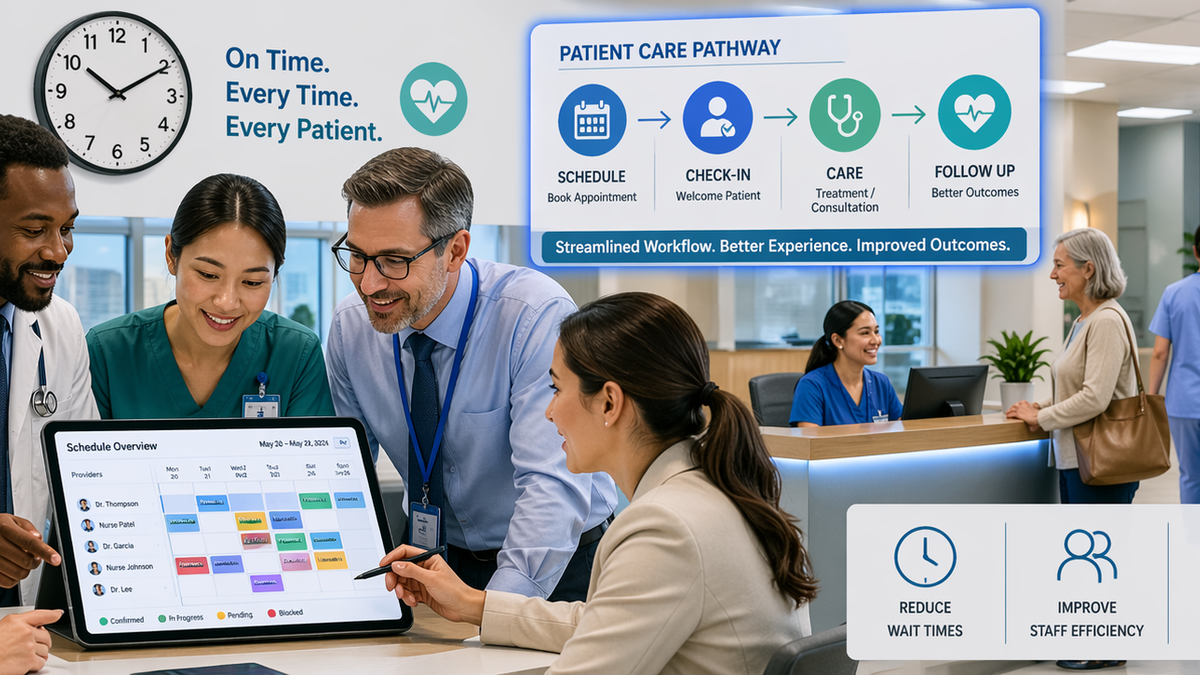
The Growing Importance of Efficient Scheduling in Healthcare
In today’s fast-paced healthcare environment, efficient scheduling is no longer just an administrative task. It is a critical component of delivering timely, high-quality patient care. As clinics and healthcare organizations grow, the complexity of managing appointments, providers, and patient flow increases significantly.
Without the right systems in place, scheduling inefficiencies can quickly lead to delays, miscommunication, and reduced patient satisfaction.
Challenges in Traditional Medical Scheduling
Many healthcare providers still rely on outdated or semi-manual scheduling processes, which can create several operational challenges:
- Double bookings and overlapping appointments
- Limited visibility into provider availability
- High rates of missed or canceled appointments
- Difficulty managing recurring visits and follow-ups
- Inefficient coordination between administrative staff and clinical teams
These issues not only affect operational efficiency but can also impact patient outcomes and overall clinic performance.
Why Custom Scheduling Systems Matter
Every healthcare organization operates differently. From small clinics to multi-provider practices, each has unique workflows, patient volumes, and operational requirements. Generic scheduling tools often fail to address these specific needs.
Custom medical scheduling systems provide the flexibility to:
- Align scheduling workflows with actual clinic operations
- Adapt to changing patient demand and provider availability
- Integrate seamlessly with other systems such as documentation and reporting
- Support long-term scalability as the organization grows
How Structured Scheduling Systems Improve Operations
Structured scheduling systems help streamline appointment management and improve workflow efficiency in healthcare environments.
One example is solutions provided by GLXY Software Solutions, which focuses on healthcare scheduling systems designed to improve operational performance.
These systems help healthcare providers:
- Centralize scheduling into a single organized system
- Automate appointment booking and updates
- Improve coordination between staff and providers
- Reduce administrative workload and manual errors
By introducing structure into scheduling processes, clinics can operate more efficiently and consistently.
Enhancing Patient Flow and Reducing Delays
One of the most immediate benefits of structured scheduling systems is improved patient flow. When appointments are properly managed, clinics can:
- Reduce patient wait times
- Minimize scheduling conflicts
- Ensure smoother transitions between appointments
- Improve overall clinic throughput
This creates a more predictable and efficient daily workflow for both staff and patients.
Improving Patient Experience and Retention
Scheduling directly impacts how patients perceive a healthcare provider. Inefficient systems can lead to frustration, missed appointments, and poor communication.
With structured scheduling systems, clinics can:
- Provide clear and consistent appointment booking
- Send automated reminders to reduce no-shows
- Improve communication with patients
- Create a more seamless and professional experience
These improvements contribute to higher patient satisfaction and stronger long-term retention.
Supporting Better Resource Utilization
Healthcare providers must carefully manage limited resources, including staff time, treatment rooms, and equipment. Custom scheduling systems help optimize these resources by:
- Aligning appointments with provider availability
- Preventing overbooking or underutilization
- Improving staff productivity
- Ensuring balanced workloads across teams
This leads to more efficient use of time and resources across the organization.
Enabling Scalable Healthcare Operations
As healthcare organizations grow, their scheduling needs become more complex. Structured systems provide the scalability needed to support:
- Increased patient volume
- Multi-provider coordination
- Expansion across multiple locations
- More complex scheduling requirements
Custom solutions ensure that scheduling systems can evolve alongside the organization.
Conclusion
Efficient scheduling is a cornerstone of successful healthcare operations. Without structured systems, clinics risk inefficiencies that impact both patient care and operational performance.
By implementing custom scheduling solutions like those offered by GLXY Software Solutions, healthcare providers can streamline workflows, improve patient experience, and build a more scalable and efficient operation.
In an increasingly complex healthcare landscape, structured scheduling systems are not just beneficial, they are essential.