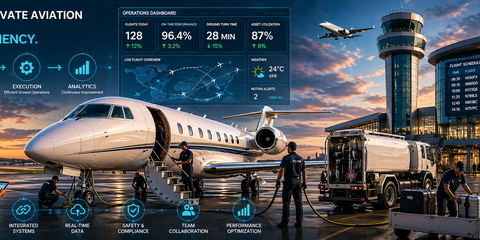
Optimizing Private Aviation Through Intelligent Workflow and Operations Management Systems

Transforming Private Aviation Operations Through Better Coordination and Visibility
Private aviation operations require exceptional precision, efficiency, and adaptability. Whether managing charter services, fixed-base operations (FBOs), aircraft scheduling, maintenance coordination, or ground operations, organizations must balance multiple operational priorities while maintaining high standards of safety and service.
As the private aviation industry continues to evolve, many organizations are moving away from fragmented processes and manual coordination toward more structured, digital systems that improve operational visibility and workflow management.
Modern aviation operations demand more than spreadsheets and disconnected tools—they require integrated systems designed to support complex operational environments.
The Growing Complexity of Private Aviation Operations
Private aviation organizations manage numerous interconnected operational processes, including:
- Aircraft scheduling and availability management
- Maintenance planning and coordination
- Crew scheduling and communication
- Ground operations and resource allocation
- Operational reporting and documentation
- Regulatory compliance and safety requirements
When these processes are managed through separate systems or manual workflows, organizations often experience:
- Communication gaps between teams
- Delays in operational decision-making
- Reduced visibility into resource availability
- Increased administrative workload
- Greater operational risk
As operations scale, these inefficiencies become increasingly difficult to manage.
Why Structured Aviation Systems Matter
To address operational complexity, aviation organizations are adopting structured workflow systems that centralize information, improve coordination, and support real-time decision-making.
GLXY Software Solutions provides aviation-focused operational systems designed to help organizations streamline workflows, improve visibility, and optimize coordination across aviation operations:
https://www.glxysoftwaresolutions.com/aviation
These solutions help transform disconnected operational processes into structured, scalable workflows that support efficiency and reliability.
Improving Scheduling and Operational Coordination
Effective scheduling is one of the most important components of aviation operations. Scheduling challenges can impact aircraft availability, maintenance planning, staffing, and overall operational performance.
Structured workflow systems help organizations:
Centralize Operational Scheduling
A unified platform provides better visibility into schedules, resources, and operational activities across teams.
Improve Resource Utilization
Organizations can optimize the use of aircraft, personnel, facilities, and operational resources.
Reduce Operational Delays
Improved coordination helps minimize bottlenecks and scheduling conflicts.
Support Real-Time Decision-Making
Operational teams gain access to up-to-date information that enables faster responses to changing conditions.
Streamlining Maintenance Coordination
Aircraft maintenance management is critical for ensuring both safety and operational continuity. Without structured systems, maintenance coordination can become time-consuming and prone to error.
Modern workflow systems help organizations:
- Track maintenance activities more effectively
- Improve coordination between maintenance and operations teams
- Organize maintenance records and documentation
- Support proactive operational planning
- Reduce administrative overhead
This structured approach helps improve operational reliability while supporting compliance requirements.
Enhancing Visibility Across Aviation Operations
One of the greatest challenges facing private aviation organizations is maintaining visibility across multiple operational functions.
Structured systems provide:
Real-Time Operational Insights
Teams can monitor operational status, scheduling updates, and workflow progress from a centralized platform.
Improved Team Collaboration
Departments can work from a shared source of information, reducing communication gaps.
Better Operational Planning
Leadership teams gain greater visibility into operational trends and resource utilization.
Increased Accountability
Structured workflows provide better tracking and oversight of operational activities.
Supporting Compliance and Risk Management
Private aviation organizations operate within highly regulated environments. Maintaining accurate documentation and structured processes is essential for reducing operational risk.
Digital workflow systems help organizations:
- Maintain organized operational records
- Improve documentation management
- Support audit readiness
- Enhance process consistency
- Strengthen operational oversight
This structured approach helps organizations maintain higher levels of operational control and reliability.
Building Scalable Aviation Operations
As aviation organizations grow, operational complexity increases significantly. Structured systems provide the scalability necessary to support:
- Larger fleets
- Expanded operational teams
- Multiple locations
- Increased flight activity
- More complex scheduling requirements
By implementing centralized workflow systems, organizations can continue to scale while maintaining operational efficiency.
The Future of Private Aviation Operations
The future of private aviation will depend heavily on organizations' ability to manage increasingly complex operations efficiently and effectively.
Digital workflow systems provide the foundation for:
- Improved operational visibility
- Better resource coordination
- Enhanced scheduling efficiency
- Stronger operational control
- More scalable business growth
Organizations that invest in structured operational systems today will be better positioned to adapt to future industry demands.
Conclusion
Private aviation operations require precision, coordination, and continuous visibility. As operational complexity continues to increase, traditional methods of managing scheduling and maintenance workflows become increasingly difficult to sustain.
By adopting structured aviation solutions like those offered by GLXY Software Solutions, organizations can streamline operations, improve coordination, reduce inefficiencies, and build more scalable and resilient aviation businesses.
In today's aviation environment, operational excellence begins with structured systems, better workflows, and smarter coordination.
Learn more about GLXY's aviation solutions:
https://www.glxysoftwaresolutions.com/aviation