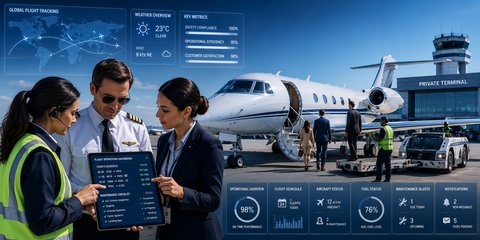
Streamlining Private Aviation Operations for Maximum Efficiency
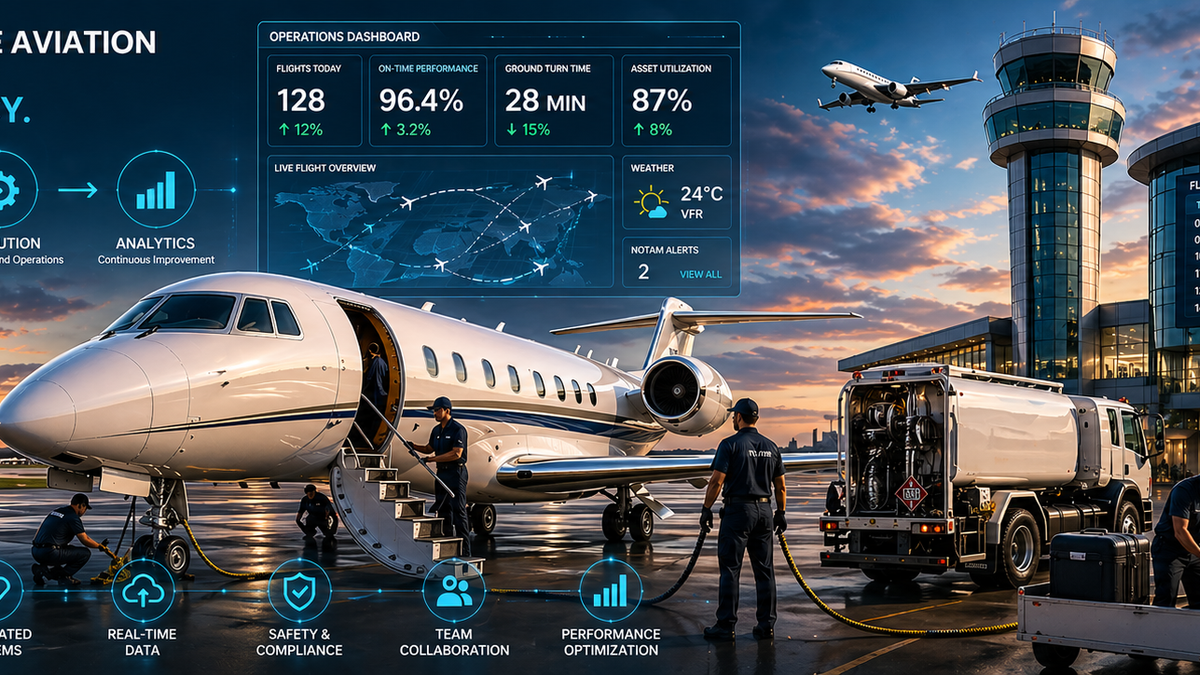
Improving Efficiency in Private Airport and Aviation Operations
Private aviation operations—whether for fixed-base operators (FBOs), charter hubs, or airfield management—require precise coordination across multiple moving parts. From runway scheduling and ground crew coordination to aircraft turnaround and operational visibility, every process must be tightly managed to maintain efficiency and safety.
As demand for private aviation services continues to grow, traditional methods of managing operations are becoming increasingly difficult to sustain. Manual coordination, fragmented systems, and limited visibility can create delays, inefficiencies, and operational risk.
To meet these challenges, aviation organizations are adopting structured digital systems that provide better control, coordination, and real-time visibility.
The Complexity of Private Aviation Operations
Private airport and aviation operations involve managing several interconnected workflows, including:
- Runway scheduling and aircraft movement coordination
- Ground crew task management and communication
- Aircraft turnaround processes
- Resource allocation across teams and facilities
- Real-time operational adjustments
These processes must work seamlessly together to ensure smooth operations and minimize delays.
Challenges with Traditional Operational Systems
Many aviation organizations still rely on manual processes or disconnected tools, which can result in:
- Delays in runway and aircraft scheduling
- Inefficient coordination between ground teams
- Limited visibility into real-time operations
- Increased risk of miscommunication
- Difficulty scaling operations as demand grows
Without a centralized system, maintaining consistency and efficiency becomes increasingly challenging.
A More Structured Approach to Aviation Operations
To improve performance and coordination, aviation organizations are shifting toward centralized workflow systems that provide real-time visibility and structured process management.
GLXY Software Solutions offers aviation-focused systems designed to streamline operations, improve coordination, and enhance workflow visibility across aviation environments:
https://www.glxysoftwaresolutions.com/aviation
These systems help transform fragmented operations into more structured and efficient workflows.
Key Benefits of Structured Aviation Systems
1. Improved Runway and Scheduling Coordination
Centralized systems allow teams to manage scheduling more effectively, reducing delays and improving overall operational flow.
2. Better Ground Crew Coordination
With structured workflows, ground teams can communicate more efficiently and stay aligned on tasks and priorities.
3. Real-Time Operational Visibility
Managers gain immediate insight into ongoing operations, enabling faster and more informed decision-making.
4. Reduced Operational Delays
By improving coordination and visibility, organizations can minimize bottlenecks and improve turnaround times.
5. Scalable Operations
Structured systems allow aviation organizations to grow and handle increased demand without sacrificing efficiency.
Enhancing Performance and Operational Control
When aviation operations are supported by structured systems, organizations can achieve:
- More predictable and consistent workflows
- Faster aircraft turnaround times
- Improved coordination across teams
- Better utilization of resources and infrastructure
This leads to smoother day-to-day operations and a stronger ability to meet service expectations.
Supporting High-Performance Aviation Environments
Private aviation operations demand both flexibility and precision. Structured workflow systems help organizations maintain this balance by:
- Standardizing processes across teams
- Reducing reliance on manual coordination
- Improving communication between departments
- Providing a centralized source of operational data
This creates a more controlled and efficient operational environment.
Preparing for the Future of Private Aviation
As private aviation continues to expand, the need for scalable and efficient operational systems will only increase. Organizations that adopt structured, workflow-driven solutions will be better positioned to:
- Handle increased traffic and demand
- Maintain high service standards
- Adapt to operational changes quickly
- Improve overall efficiency and reliability
Conclusion
Private aviation operations are becoming more complex, and traditional methods are no longer sufficient to manage this complexity effectively.
By adopting structured systems like those provided by GLXY Software Solutions, aviation organizations can improve coordination, enhance visibility, and streamline operations across their entire workflow.
In today’s fast-paced aviation environment, efficient and structured operations are essential for delivering consistent, high-quality performance.