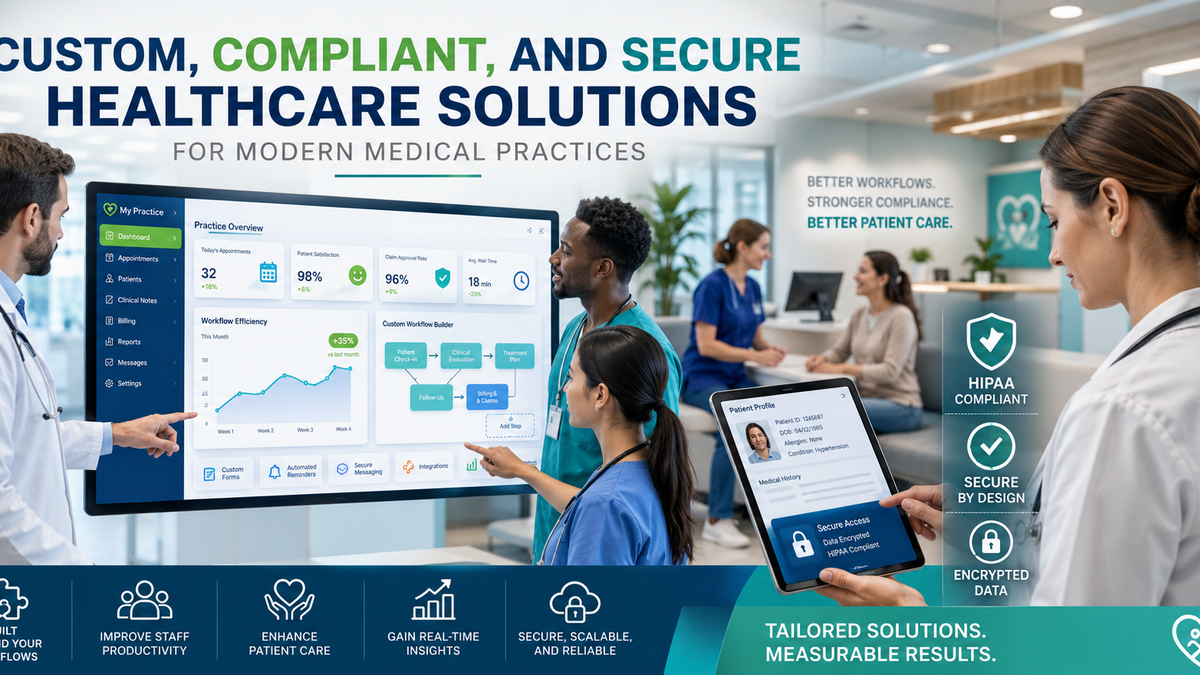
Custom, Compliant, and Secure Healthcare Solutions for Modern Medical Practices
Building Healthcare Systems Around the Way Your Practice Works
Healthcare organizations face growing demands to improve efficiency, protect patient information, and maintain regulatory compliance while continuing to deliver exceptional patient care. Unfortunately, many practices are forced to adapt their workflows to generic software that only partially meets their needs.
Every medical practice operates differently. Specialty clinics have unique scheduling requirements, documentation processes, compliance obligations, and patient workflows. A one-size-fits-all approach often creates inefficiencies that impact both staff productivity and patient experience.
Custom healthcare solutions provide an alternative by allowing organizations to implement systems designed around their actual operational needs.
The Challenges of Generic Healthcare Software
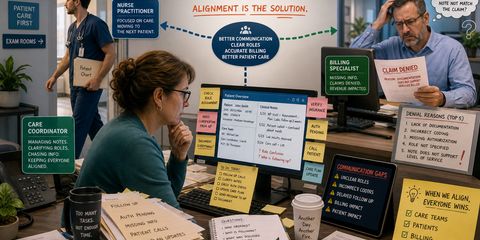
Many healthcare providers encounter common challenges when using off-the-shelf platforms:
- Workflows that do not match day-to-day operations
- Limited flexibility for specialty-specific requirements
- Duplicate data entry and administrative inefficiencies
- Difficulty integrating with existing systems
- Compliance concerns related to data management and access controls
Over time, these limitations can create operational bottlenecks and increase administrative burden across the organization.
Why Custom Healthcare Solutions Matter
Custom software solutions are designed to support the unique requirements of a healthcare practice rather than forcing teams to change how they work.
GLXY Software Solutions specializes in developing healthcare-focused systems that help organizations improve operational efficiency, enhance security, and streamline workflow management.
Examples of GLXY healthcare solutions include:
- Healthcare scheduling systems
- HIPAA-focused document management solutions
- Workflow automation platforms
- Custom software development for healthcare organizations
Healthcare Services:
https://www.glxysoftwaresolutions.com/healthcare/clinical-scheduling
HIPAA Document Management:
https://www.glxysoftwaresolutions.com/healthcare/hipaa-document-management
By tailoring technology to actual operational requirements, practices can create more efficient and scalable processes.
Security and Compliance by Design
Protecting patient information is one of the most important responsibilities in healthcare. Any technology solution must support strong security practices and help organizations maintain compliance with healthcare regulations.
Modern healthcare systems should include:
Secure Data Management
Patient information must be stored and managed using secure technologies and controlled access policies.
Role-Based Access Controls
Staff members should only have access to the information necessary for their responsibilities.
Audit Trails and Activity Tracking
Organizations benefit from visibility into system activity, document access, and workflow changes.
Structured Document Management
Maintaining organized and secure documentation supports both operational efficiency and regulatory readiness.
A well-designed system helps reduce risk while supporting day-to-day healthcare operations.
Solutions Designed Around Your Workflow
One of the biggest advantages of custom healthcare software is the ability to align technology with existing workflows.
Rather than adapting to software limitations, practices can implement solutions that support:
- Appointment scheduling processes
- Patient communication workflows
- Documentation management
- Team collaboration
- Administrative operations
This creates a more seamless experience for both staff and patients.
Supporting Specialty Healthcare Practices
Specialty practices often face operational challenges that differ from general healthcare environments. Scheduling, documentation requirements, patient management, and reporting needs can vary significantly between specialties.
Custom healthcare solutions can support organizations across a wide range of medical fields, including:
- Dental and oral healthcare
- Pediatrics
- Women's health
- Oncology
- Pathology
- Hematology
- Infectious disease practices
- Multi-specialty clinics
By understanding the specific needs of each organization, custom solutions can be designed to support specialized workflows and operational goals.
Improving Efficiency Through Better Systems
When healthcare technology aligns with operational requirements, organizations often experience improvements in:
Administrative Efficiency
Reducing manual processes allows staff to focus on higher-value tasks.
Workflow Consistency
Structured systems help standardize processes and reduce errors.
Patient Experience
More efficient operations can lead to smoother scheduling, communication, and care coordination.
Scalability
Custom systems can grow alongside the organization as patient volume and operational complexity increase.
The Value of a Personalized Assessment
Every healthcare organization has unique goals, challenges, and workflow requirements. A thorough assessment process helps ensure that technology solutions are designed to support those specific needs.
By evaluating existing processes, identifying inefficiencies, and understanding organizational priorities, healthcare providers can implement solutions that deliver meaningful operational improvements.
This approach creates a stronger foundation for long-term success and allows organizations to invest in technology that truly supports their mission.
Conclusion
Modern healthcare organizations need technology solutions that are secure, compliant, and tailored to the way they operate. Generic software often falls short of meeting the unique requirements of specialty practices and growing healthcare organizations.
By implementing custom healthcare solutions such as clinical scheduling systems, secure document management platforms, and workflow automation tools, organizations can improve efficiency, strengthen data security, and create better experiences for both staff and patients.
With the right technology foundation in place, healthcare providers can focus more on delivering quality care and less on managing operational challenges.