How 3D Printing Could Shape the Future of Construction

Innovation Is Transforming the Construction Industry
The construction industry has always evolved alongside new technology. From computer-aided design (CAD) and Building Information Modeling (BIM) to drones and digital project management platforms, innovation continues to improve how projects are planned and executed.
One of the most exciting developments is 3D printing in construction. While the technology is still evolving, it has the potential to change how buildings and infrastructure are designed and built by reducing material waste, shortening construction timelines, and enabling more customized designs.
However, successful adoption of emerging technologies requires more than advanced equipment—it also depends on structured project management, accurate documentation, and efficient collaboration across every phase of a project.
What Is 3D Printing in Construction?
Construction 3D printing uses specialized printers to create structural components—or in some cases entire buildings—by depositing construction materials layer by layer based on digital designs.
Unlike traditional construction methods, which often require extensive manual labor and multiple stages of fabrication, 3D printing automates portions of the building process while maintaining precision.
Although large-scale adoption is still developing, construction companies worldwide are exploring how this technology can help address labor shortages, reduce costs, and improve sustainability.
Benefits of 3D Printing in Construction
Faster Project Delivery
One of the biggest advantages of construction 3D printing is speed. Certain structural elements can be produced significantly faster than with conventional construction techniques, helping projects stay on schedule.
Although the technology may not replace traditional construction entirely, it can reduce delays for specific project phases.
Reduced Material Waste
Traditional construction often generates significant material waste due to cutting, excess ordering, and unused materials.
Because 3D printing builds components with precise measurements, material usage can be optimized, supporting both sustainability initiatives and cost control.
Greater Design Flexibility
Architects and engineers can create more complex shapes and customized structures that would otherwise be difficult or expensive to build using conventional methods.
This opens new opportunities for innovative building design without dramatically increasing construction complexity.
The Challenges of Adopting 3D Printing
Despite its promise, several challenges remain before 3D printing becomes a standard construction practice.
These include:
- High equipment investment costs
- Limited availability of compatible construction materials
- Regulatory and building code considerations
- Workforce training requirements
- Integration with existing construction workflows
As the technology matures, many of these barriers are expected to decrease.
Technology Alone Doesn't Deliver Successful Projects
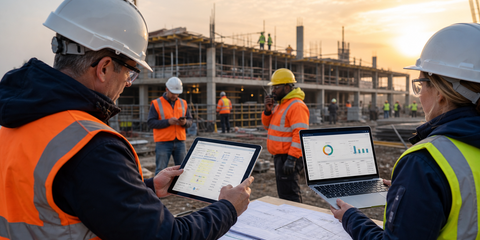
While 3D printing may improve the physical construction process, successful projects still rely on effective coordination between contractors, engineers, architects, and project managers.
Construction projects involve thousands of documents, schedules, approvals, inspections, and change requests that must remain organized throughout the project lifecycle.
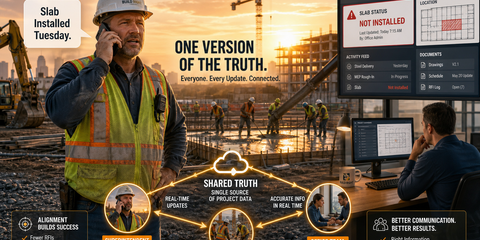
Without structured systems, even the most advanced construction technologies can be slowed by communication gaps, outdated documentation, or inefficient workflows.
Building Better Construction Workflows with GLXY Software Solutions
As construction technology advances, organizations also need modern digital tools to manage increasingly complex projects.
GLXY Software Solutions provides Construction Project Management solutions designed to help construction teams improve coordination, organize documentation, and maintain visibility across every stage of a project.
These solutions help organizations:
- Centralize project documentation
- Improve communication between project teams
- Track project milestones and progress
- Organize engineering and construction workflows
- Reduce manual administrative work
- Improve visibility into ongoing projects
Rather than replacing construction expertise, structured workflow systems help teams execute projects more efficiently while supporting new technologies like BIM, automation, and future innovations such as 3D printing.
Preparing for the Future of Construction
Emerging technologies—including artificial intelligence, automation, robotics, drones, and 3D printing—are reshaping how construction projects are delivered.
Organizations that invest in digital project management alongside these innovations will be better positioned to:
- Improve collaboration across teams
- Reduce project delays
- Increase operational efficiency
- Scale projects more effectively
- Adapt to future industry changes
Technology works best when supported by well-organized workflows and reliable project management systems.
Conclusion
3D printing has the potential to become an important part of the future of construction by improving efficiency, reducing waste, and expanding design possibilities. While the technology continues to evolve, its success will depend on how well organizations manage the people, processes, and information surrounding each project.
By combining innovative construction methods with structured project management solutions like those offered by GLXY Software Solutions, construction companies can improve collaboration, streamline operations, and prepare for the next generation of building technologies.
Learn more about GLXY's Construction Project Management solutions:
https://www.glxysoftwaresolutions.com/construction-project-management