Responsible AI in Healthcare: Balancing Innovation and Security
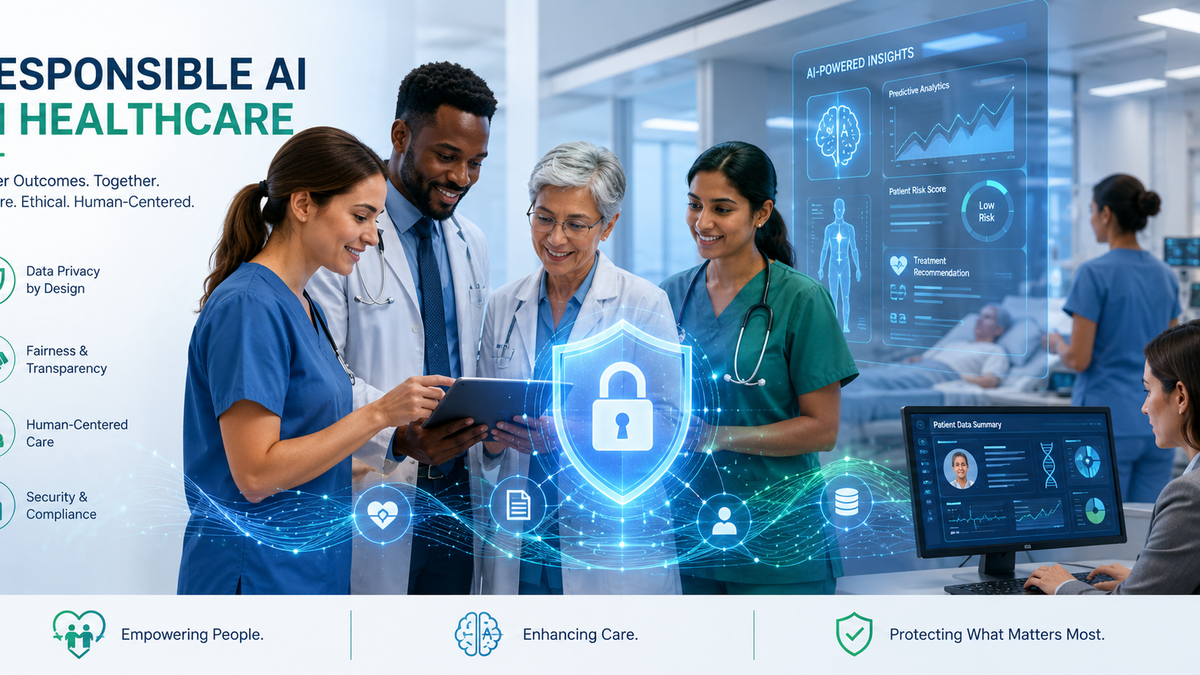
How Healthcare Organizations Can Use AI Responsibly
Artificial intelligence is rapidly reshaping healthcare. From streamlining administrative processes to improving scheduling and document management, AI offers healthcare organizations new ways to increase efficiency while reducing operational burdens.
However, as organizations embrace AI-powered tools, protecting patient data remains a top priority. Healthcare providers must ensure that innovation never comes at the expense of privacy, security, or regulatory compliance.
The organizations that benefit most from AI are those that implement it strategically, combining automation with strong governance and secure technology infrastructure.
The Growing Role of AI in Healthcare
Healthcare professionals spend a significant portion of their day managing documentation, scheduling appointments, coordinating care, and handling administrative tasks.
AI can help improve efficiency in areas such as:
- Organizing and managing healthcare documentation
- Streamlining scheduling processes
- Improving operational workflows
- Reducing repetitive administrative work
- Supporting data-driven decision-making
When used appropriately, AI enables healthcare teams to focus more time on patient care and less time on manual processes.
Why Patient Data Protection Matters
Healthcare organizations handle highly sensitive information every day. Protecting patient privacy is not only an ethical responsibility but also a regulatory requirement.
Without proper safeguards, AI adoption can introduce risks such as:
- Unauthorized access to sensitive information
- Compliance violations
- Data security vulnerabilities
- Inconsistent governance and oversight
This is why healthcare organizations must evaluate how data is collected, stored, accessed, and protected when implementing new technologies.
Building Secure Healthcare Workflows
Technology is most effective when supported by secure and structured processes.
Healthcare organizations can improve efficiency while protecting patient information by implementing solutions that provide:
- Secure document storage and access controls
- Audit trails and activity tracking
- Structured workflow management
- Centralized access to critical information
- Compliance-focused operational processes
GLXY Software Solutions helps healthcare organizations modernize operations through secure cloud-based systems designed to improve efficiency and support compliance requirements.
Related GLXY Healthcare Solutions
HIPAA-Compliant Document Management:
https://www.glxysoftwaresolutions.com/healthcare/hipaa-document-management
Clinical Scheduling Solutions:
https://www.glxysoftwaresolutions.com/healthcare/clinical-scheduling
Improving Healthcare Scheduling with Technology
One of the most common operational challenges in healthcare is managing schedules effectively.
Manual scheduling processes often lead to:
- Appointment conflicts
- Resource inefficiencies
- Administrative delays
- Increased workload for staff
Modern scheduling solutions help organizations coordinate providers, staff, and resources more efficiently while improving the patient experience.
GLXY's Clinical Scheduling solutions are designed to support healthcare organizations seeking better visibility, coordination, and workflow management.
Maintaining Human Oversight
While AI can assist with administrative and operational tasks, it should not replace professional medical judgment.
Healthcare organizations should use AI to:
- Support workflow efficiency
- Improve organization and accessibility of information
- Reduce administrative burdens
Clinical decisions should always remain under the supervision of qualified healthcare professionals.
Human oversight remains essential for ensuring patient safety, quality of care, and accountability.
Preparing Your Organization for Responsible AI Adoption
Successful AI implementation requires more than technology alone.
Organizations should establish:
- Clear AI usage policies
- Data governance standards
- Staff training programs
- Security and compliance procedures
Creating a culture of responsible technology adoption helps organizations maximize benefits while minimizing risks.
The Future of AI in Healthcare
AI will continue to play an increasingly important role in healthcare operations. Organizations that adopt secure, compliant, and patient-centered approaches will be best positioned to benefit from future innovations.
Potential advantages include:
- Improved operational efficiency
- Better scheduling and resource management
- Enhanced document management
- Reduced administrative costs
- More time dedicated to patient care
The key is ensuring that security, privacy, and compliance remain foundational components of every AI initiative.
Conclusion
Artificial intelligence offers significant opportunities for healthcare organizations looking to improve efficiency and modernize operations. However, successful adoption requires a careful balance between innovation and patient data protection.
By combining responsible AI practices with secure healthcare technology solutions, organizations can streamline workflows, improve operational performance, and maintain the trust of patients and stakeholders.
As healthcare continues to evolve, organizations that prioritize both efficiency and security will be best positioned for long-term success.
Explore GLXY Healthcare Solutions
HIPAA-Compliant Document Management:
https://www.glxysoftwaresolutions.com/healthcare/hipaa-document-management
Clinical Scheduling Solutions:
https://www.glxysoftwaresolutions.com/healthcare/clinical-scheduling
Custom Software Development Services:
https://www.glxysoftwaresolutions.com/#services