Secure Healthcare Document Management for Clinic Teams
Why Healthcare Organizations Need Better Document Management Systems
Healthcare organizations manage some of the most sensitive and critical information in any industry. From patient records and treatment plans to compliance documentation and operational policies, access to accurate information directly impacts patient care, staff efficiency, and regulatory compliance.
As healthcare systems continue to grow and evolve, relying on fragmented storage systems, paper-based processes, or disconnected applications can create significant challenges. Delays in accessing information, inconsistent document handling, and compliance risks can all affect the quality and efficiency of care delivery.
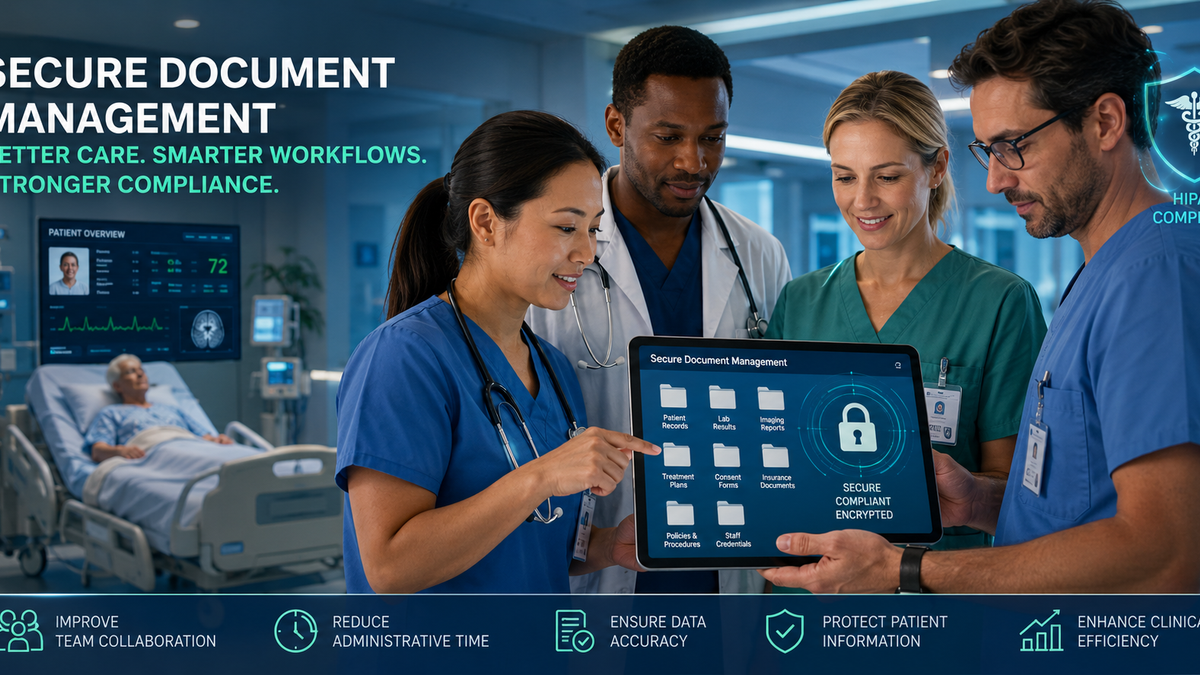
To address these challenges, healthcare organizations are increasingly adopting secure, cloud-based document management systems that provide centralized access, structured workflows, and stronger compliance controls.
The Challenges of Healthcare Documentation
Hospitals, clinics, and healthcare providers handle a wide variety of critical documents every day, including:
- Patient records and medical histories
- Clinical policies and procedures
- Regulatory and compliance documentation
- Staff certifications and training records
- Operational and administrative documents
Without a centralized system, organizations often face:
- Difficulty locating documents quickly
- Version control issues and outdated information
- Increased administrative workload
- Security and access control concerns
- Compliance and audit preparation challenges
These issues can slow down operations and place unnecessary burdens on healthcare teams.
A More Structured Approach to Healthcare Document Management
Modern healthcare organizations require systems that do more than simply store files. They need platforms that help organize information, support workflows, and ensure secure access to critical documents.
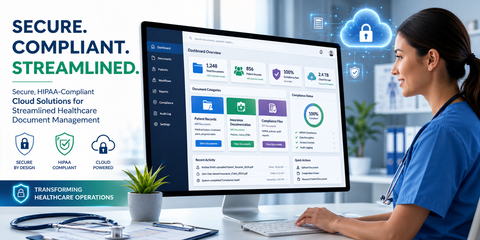
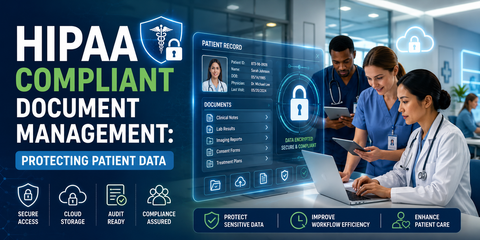
GLXY Software Solutions provides healthcare-focused solutions designed to improve document organization, workflow efficiency, and regulatory compliance.
One example is GLXY's HIPAA-focused document management solution:
https://www.glxysoftwaresolutions.com/healthcare/hipaa-document-management
This solution helps healthcare organizations centralize documentation while maintaining the security and accessibility required in clinical environments.
Supporting Secure Access to Critical Information
Healthcare professionals often need immediate access to information to support patient care and operational decision-making.
Modern document management systems help organizations:
Centralize Documentation
Store documents in a single, organized environment that improves accessibility and reduces duplication.
Improve Information Retrieval
Structured document organization and search capabilities help staff locate information quickly when needed.
Strengthen Security
Role-based permissions and controlled access help ensure sensitive information is available only to authorized personnel.
Maintain Document Accuracy
Version tracking and document controls help teams work from the most current information available.
Enhancing Compliance and Audit Readiness
Healthcare organizations operate under strict regulatory requirements that demand consistent documentation and secure information management.
Structured document management systems support compliance by helping organizations:
- Maintain complete documentation records
- Track document activity and updates
- Standardize document retention practices
- Prepare for audits more efficiently
- Reduce compliance-related administrative tasks
By improving visibility and control, healthcare providers can reduce risk while maintaining regulatory readiness.
Improving Clinical and Administrative Workflows
Document management affects more than compliance—it also impacts day-to-day operations.
When information is organized and accessible, healthcare teams can:
- Improve coordination between departments
- Reduce time spent searching for documents
- Streamline approval and review processes
- Support more efficient patient care workflows
- Increase overall operational productivity
This allows staff to focus more on delivering quality care and less on managing paperwork.
Supporting a Mobile and Connected Healthcare Environment
Today's healthcare professionals often work across multiple departments, facilities, and care settings. Cloud-based systems support this environment by providing secure access to information wherever it is needed.
Benefits include:
- Access to documents across locations
- Improved collaboration among healthcare teams
- Consistent document management processes
- Greater operational flexibility
This helps organizations adapt to evolving healthcare delivery models while maintaining security and compliance.
Building a Foundation for Better Patient Care
Effective document management plays a significant role in supporting patient care. When healthcare teams have access to accurate information at the right time, they can make better-informed decisions and respond more efficiently to patient needs.
By implementing structured document management systems, organizations create a stronger foundation for:
- Improved communication
- Better operational efficiency
- Reduced administrative burden
- Enhanced compliance management
- Higher-quality patient experiences
Conclusion
Healthcare organizations depend on accurate, secure, and accessible information to deliver quality care and maintain regulatory compliance. As documentation requirements continue to grow, centralized and structured document management systems become increasingly important.
With solutions such as GLXY Software Solutions' HIPAA-focused document management platform, healthcare providers can improve efficiency, strengthen compliance, and create more organized workflows that support both staff and patients.
In today's healthcare environment, effective document management is not simply an administrative function—it is an essential part of delivering reliable, efficient, and patient-focused care.