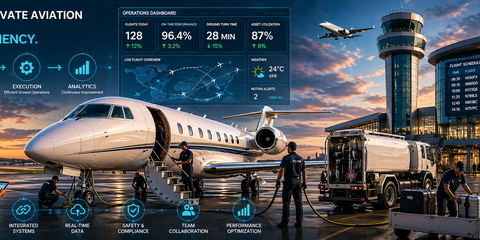
Streamlining Aviation Operations: Overcoming Complexity Challenges

Managing Complexity in Modern Aviation Operations
Aviation is one of the most operationally demanding industries in the world. Every flight operation depends on precise coordination between multiple teams, strict regulatory compliance, and time-sensitive execution.
From scheduling and maintenance coordination to ground operations and compliance tracking, even minor inefficiencies can lead to delays, increased costs, and operational risk.
This makes structured workflow systems essential for maintaining safety, reliability, and efficiency.
The Challenges of Aviation Operations Management
Aviation organizations must coordinate a wide range of complex and interconnected processes, including:
- Flight and crew scheduling coordination
- Maintenance planning and tracking
- Ground operations and turnaround management
- Regulatory compliance and documentation
- Resource allocation across teams and locations
Without a centralized system, these processes often rely on manual coordination or fragmented tools, increasing the risk of miscommunication and operational delays.
The Importance of Structured Aviation Systems
To address these challenges, aviation organizations are increasingly adopting structured digital systems that improve visibility, coordination, and workflow management across operations.
GLXY Software Solutions provides aviation-focused solutions designed to improve operational efficiency and coordination across complex aviation environments:
https://www.glxysoftwaresolutions.com/aviation
These solutions are built to support key aviation operational needs such as:
- Improved coordination across aviation workflows
- Better visibility of operational tasks and processes
- Enhanced management of scheduling and operational planning
- Support for structured, data-driven decision-making
Improving Operational Efficiency in Aviation
When aviation workflows are properly structured, organizations can significantly improve operational performance across multiple areas:
1. Better Coordination Across Teams
Structured systems help align flight operations, ground staff, and management teams under a unified workflow.
2. Reduced Operational Delays
Clear task tracking and coordination reduce bottlenecks in scheduling and execution.
3. Improved Resource Utilization
Aircraft, crews, and ground resources can be managed more efficiently.
4. Increased Operational Visibility
Leadership teams gain real-time insight into operations, helping them respond quickly to changes.
Enhancing Safety and Compliance
In aviation, safety and compliance are non-negotiable. Structured workflow systems help strengthen both by ensuring:
- Operational tasks are properly tracked and completed
- Maintenance schedules are followed consistently
- Documentation is organized and accessible
- Communication gaps are minimized across teams
This level of structure reduces operational risk and supports regulatory compliance standards.
Supporting Scalable Aviation Operations
As aviation organizations grow, operational complexity increases. Structured systems provide scalability by:
- Supporting higher volumes of operational data
- Improving coordination across multiple locations
- Enabling standardized workflows across teams
- Reducing dependency on manual processes
This allows aviation organizations to scale operations without sacrificing efficiency or safety.
Conclusion
Aviation operations require a high level of precision, coordination, and control. As complexity increases, structured workflow systems become essential for maintaining operational efficiency and safety.
By leveraging aviation-focused solutions like those provided by GLXY Software Solutions, organizations can improve coordination, reduce operational inefficiencies, and ensure more reliable and scalable aviation operations.