The Hidden Costs of Healthcare AI: Protecting Patient Data
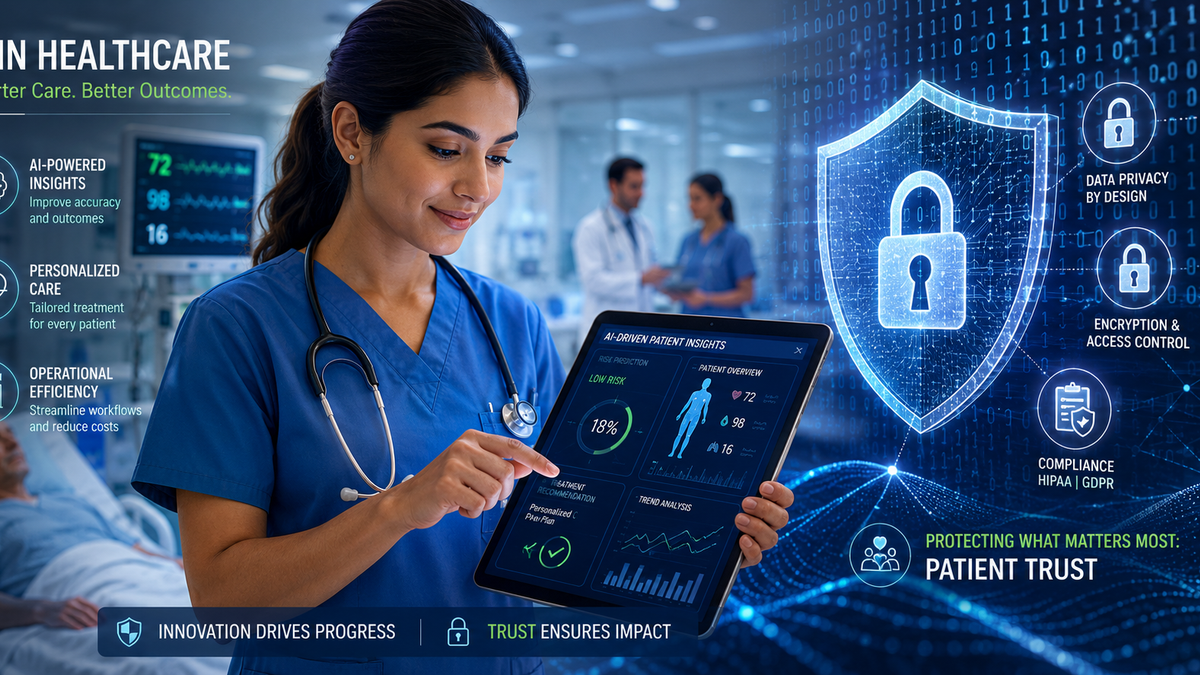
Balancing Innovation, Compliance, and Patient Data Security
Artificial intelligence is rapidly transforming healthcare operations. From documentation and patient communication to clinical decision support and operational analytics, AI is helping healthcare organizations improve efficiency and outcomes.
However, behind this innovation lies a critical challenge that many organizations overlook: patient data privacy and regulatory compliance risk.
Without proper systems in place, the use of AI in healthcare workflows can unintentionally expose sensitive patient information and create compliance vulnerabilities.
The Healthcare AI Paradox
AI has the potential to significantly improve healthcare delivery by:
- Reducing administrative workload
- Supporting faster clinical documentation
- Assisting in patient data analysis
- Enhancing operational decision-making
- Improving care coordination
But these benefits come with a serious tradeoff.
When sensitive healthcare data is entered into unsecured or unmanaged systems, organizations lose control over:
- Where data is stored
- How it is processed
- Whether it is retained or reused
- Who has access to it
This creates potential risks related to HIPAA compliance, patient privacy, and organizational liability.
Where Healthcare AI Risks Commonly Occur
1. Clinical Documentation and Summarization
Healthcare staff may use AI tools to generate notes or summarize patient interactions. Without secure systems, patient data may be exposed outside approved environments.
2. Research and Data Analysis
Clinical research teams analyzing patient datasets risk exposing protected health information if data is processed through unsecured AI platforms.
3. Operational Communication
Care teams and administrators may use AI to simplify medical communication, but improper handling of sensitive information can lead to unintended data exposure.
4. Quality Improvement Programs
Healthcare organizations analyzing patient outcomes must ensure that all data used in AI workflows remains within secure and compliant systems.
Why Traditional AI Tools Create Compliance Challenges
Many publicly available AI tools are not designed for regulated healthcare environments. Key concerns include:
- Lack of control over data storage and retention
- Limited transparency into data usage
- Absence of healthcare-specific compliance safeguards
- Risk of unauthorized data exposure
For healthcare organizations, this makes governance and system design just as important as the AI itself.
Building Secure Healthcare AI Workflows
Instead of relying on unmanaged tools, healthcare organizations are shifting toward structured, secure systems that integrate AI capabilities within compliant environments.
GLXY Software Solutions provides healthcare-focused workflow and document management systems designed to support secure handling of sensitive clinical and operational data:
https://www.glxysoftwaresolutions.com/healthcare/hipaa-document-management
These systems help ensure that healthcare data remains protected while enabling organizations to modernize their operations safely.
Core Principles of Secure Healthcare AI Adoption
1. Data Protection by Design
Healthcare systems must ensure that patient data is protected at every stage of processing, not added as an afterthought.
2. Controlled AI Integration
AI capabilities should be embedded within secure environments where data access, storage, and processing are governed.
3. Auditability and Compliance Tracking
Every interaction with patient data must be traceable, logged, and reviewable for compliance purposes.
4. Role-Based Access Control
Access to sensitive data must be restricted based on job roles and responsibilities.
Strengthening Healthcare Data Governance
To safely adopt AI in healthcare, organizations need structured governance frameworks that include:
- Clear data classification rules for patient information
- Defined policies for AI usage in clinical workflows
- Continuous monitoring of data access and system usage
- Compliance oversight across IT, legal, and clinical teams
This ensures that innovation does not compromise regulatory obligations.
Enhancing Operational Efficiency Without Risk
When healthcare organizations implement structured, secure systems, they can:
- Reduce administrative burden safely
- Improve documentation accuracy
- Enhance care coordination
- Maintain compliance with regulatory standards
- Increase operational efficiency without exposing patient data
This allows AI to be used as a tool for improvement, not a source of risk.
The Importance of Secure Infrastructure in Healthcare AI
Healthcare AI is most effective when supported by a secure foundation. Without it, organizations risk:
- Regulatory penalties
- Data breaches
- Loss of patient trust
- Operational disruptions
With the right infrastructure, however, AI becomes a powerful enabler of safer, more efficient healthcare delivery.
Conclusion
Healthcare AI offers significant opportunities to improve patient care and operational efficiency, but only when implemented responsibly.
The real challenge is not the technology itself, but how patient data is managed, protected, and governed within AI-enabled workflows.
By leveraging secure, structured systems like those provided by GLXY Software Solutions’ healthcare document management platform, organizations can safely modernize operations while maintaining full compliance and patient trust.
In healthcare, innovation must always be balanced with responsibility, and data protection is at the center of that balance.