What Leaders Actually Ask Us to Fix (It’s Not “AI”)

No CEO wakes up thinking, “We need artificial intelligence today.”
They wake up asking why the project is behind again. Why the quote still isn’t out the door. Why the field and the office are looking at different numbers. Why the same facts get typed twice before anyone can act.
Sometimes they say they need AI because that word is everywhere. What they really mean is simpler: something in the business is stuck, and it’s costing time, money, or trust.
This post is the first in a short series. We start with the problems we hear most, especially from construction and operations leaders, in plain language. Later posts cover what AI is good for (without buzzwords), how we listen before we build, and what a path from first call to a working system can look like.
Why “we need AI” is the wrong starting question
Buying “AI” as a product is like buying “tools” without saying which job you need done. You can spend a lot of money and still have the same slow week.
A better starting question is: What slows the business down every week? Where do people wait on someone else? Where do numbers show up too late to help? Where does the same information get typed twice?
When those answers are clear, technology, including AI when it actually helps, has a job to do. When they aren’t clear, you get demos, buzzwords, and little change.
Problem #1: You can’t quote fast (and accurate) and stay alive
One builder put it bluntly on a recent call: if you can’t get quotes out quickly, you’re in trouble. Speed alone isn’t enough. The quote still has to be accurate, and it has to look familiar enough that the team will use it.
What that usually means in practice:
- Sales needs a simple path to get a quote out the door
- Purchasing and costing need material lists and real costs under the same work
- The layout should feel like how the industry already quotes, not a science project
- Special items and exceptions need a clear place without making every line complicated
Quoting is often where money is won or lost before a job even starts. If quoting is slow or messy, everything downstream inherits that mess.
Problem #2: Job cost and margins stay invisible until it is too late
Many teams still learn the real margin after the job is over, or after someone has rebuilt numbers in a spreadsheet.
Leaders ask for things like:
- Costs that update as work happens, not weeks later
- A clear link between the job in the field and the books (or the ERP)
- Alerts when a margin is heading the wrong way
- Views that fit the role (field, purchasing, finance) without retyping the same data
This isn’t about fancy charts. It’s about knowing whether a job is healthy while you can still do something about it.
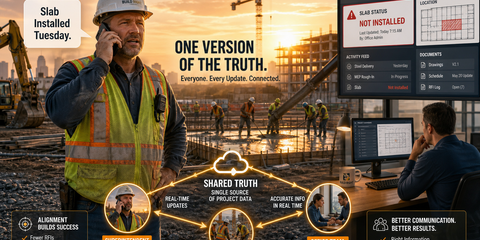
Problem #3: Field and office systems do not share one truth
A common pattern: the portal says one thing, the accounting system says another, and someone in the middle is copying jobs, orders, or cost centers by hand.
When systems don’t share one truth, you get:
- Jobs that don’t show up where they should
- Wrong cost centers or defaults
- Errors when people navigate between tools
- Meetings spent arguing about which screen is right
CEOs feel this as delay and risk. Ops feels it as rework. The field feels it as “the office never has what we need.” Same problem. Different seats.
Problem #4: Care teams need roles, notes, billing queues, and reliable sync
Outside construction, we hear a close cousin of the same story in care and clinical operations.
Teams need notes that are easy to finish and sign. Billers need a clear queue of signed work. Providers need a simple way to fix something when billing has a question, without hunting through email. And when notes are supposed to sync to another system, that sync has to work. If it doesn’t, people invent workarounds and trust drops.
Again: not “we need AI.” They need roles, workflows, and systems that agree.
Problem #5: Support know-how trapped in calls nobody can use
In service businesses, a lot of hard-won answers live in phone calls and chat threads. A GM or partner can’t search that knowledge later. New people re-learn the same fixes. The company pays twice: once to solve the issue, and again every time it comes back.
Leaders ask for a way to turn day-to-day support into something the business can reuse. That’s a knowledge problem first. Technology is how you solve it.
What these problems have in common
Look across quoting, job cost, shared truth, clinical workflows, and trapped support knowledge. The pattern is the same:
- Work is split across people and tools
- The “source of truth” is unclear
- Speed and accuracy both matter
- Different roles need different views of the same facts
- “AI” only helps after the real job is named
That’s why we start with problems, not products.
What’s next in this series
Next: What AI Actually Does for a Business. We explain it in plain English: pattern spotting, faster answers from information you already have, and learning over time, without the hype. Then we’ll show how we listen before we build, and what a path from first call to a working solution looks like.
If any of the problems above sound familiar, see how we think about construction operations, or book a short call and bring one real bottleneck. We’ll start there.