Aviation's Real Problem Isn't the Schedule. It's Hours, Records, and Billing That Don't Agree
Aviation's Real Problem Isn't the Schedule. It's Hours, Records, and Billing That Don't Agree
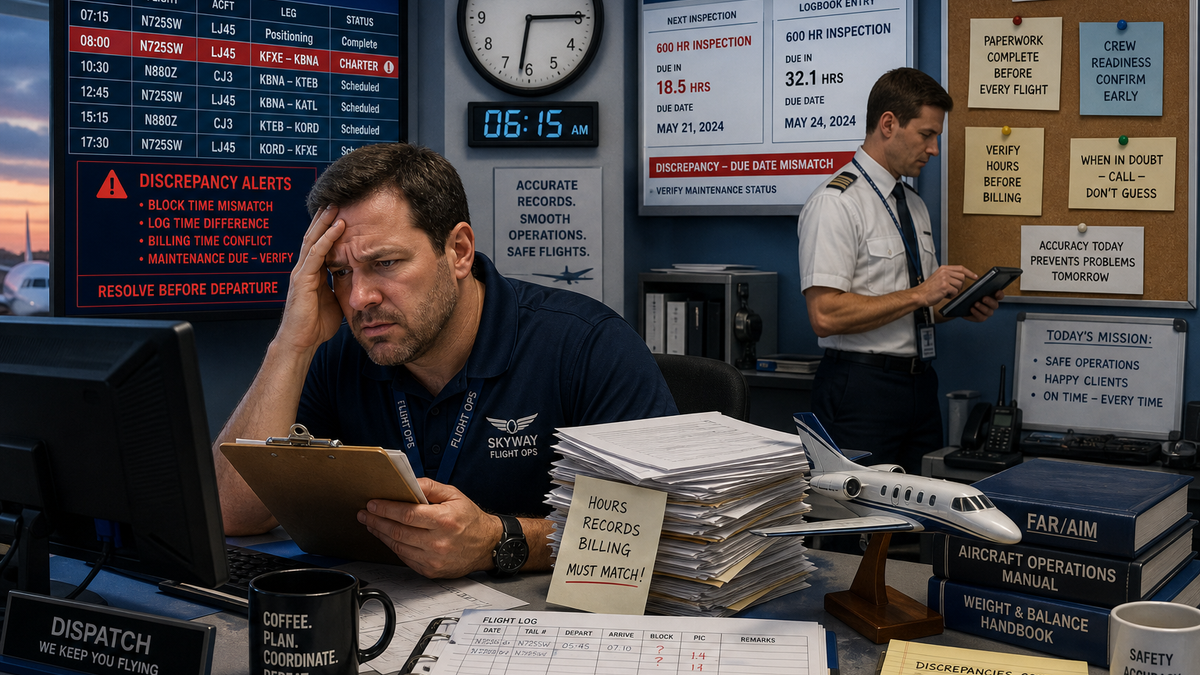
It is 6:15 in the morning. A charter leg leaves at 8:00. The maintenance tracker says the aircraft has room before its next inspection. But last night's Hobbs time is still on a paper sheet in the pilot's flight bag, and nobody has entered it yet. The dispatcher is not sure the aircraft is actually good to go.
Nobody in that office wants a new scheduling system. They want to know, before wheels up, that the airplane, the crew, and the paperwork all say yes.
This is the aviation post in our industry series. We opened with shared truth on a construction job, then looked at notes and billing in healthcare and the current drawing set in engineering. Most recently we wrote a buyer checklist for construction project software. Aviation has the same split. The stakes are just higher when the answer is wrong.
The problem is not the schedule
Most flight departments and charter operators can build a schedule. The calendar is usually the cleanest thing they have.
The trouble is everything the schedule depends on. How many hours are really on the aircraft. Whether the crew is current and inside their duty limits. Where the latest inspection record lives. What the owner gets billed for the trip. Each of those answers sits somewhere different, and a person has to go collect them.
So the schedule looks certain on screen. Underneath it is a stack of assumptions somebody is holding in their head.
The four places aviation operations split
Flight log vs. maintenance tracker. Hobbs and tach times get written down after the flight and typed in later. Until then, the maintenance tracker is counting down from old numbers. An inspection that is due in three hours can look like it is due in thirty.
Schedule vs. crew. The trip is booked, but pilot hours, duty time, and certifications live in a spreadsheet or a separate app. The scheduler finds out a pilot is out of rest when the pilot says so, not when the trip is built.
Aircraft records vs. the people who need them. Logbooks, inspection sign-offs, airworthiness items, and insurance documents sit in binders, email attachments, and a shared drive. When someone asks for one, the answer is "give me an hour." That is the gap behind every search for aerospace document management.
The flight vs. the invoice. Legs, fuel, fees, positioning, and wait time get rebuilt from notes days later. The trip went fine. The bill is a research project, and the owner or charter client sees the mistakes.
Why adding another aviation app makes it worse
The usual fix is another tool. One app for scheduling. One for maintenance. One for documents. A spreadsheet for crew. Accounting for billing.
Each tool is good at its one job. None of them agree with each other. Now the ops manager's real job is copying numbers between them and hoping nothing changed in between. More aviation operations software, bought one piece at a time, can mean more places for the truth to split.
This is the same pattern we saw in construction and healthcare. The software was not bad. The handoffs between it were never owned.
What it actually costs
The obvious cost is a trip that has to move because the aircraft or crew turns out to be unavailable. That one gets noticed.
The quieter costs add up faster:
- A director of maintenance rechecking hours by hand before every week.
- A dispatcher calling pilots to confirm what the system should already know.
- A records request that takes a day instead of a minute.
- Invoices that go out late, get disputed, or leave fees on the table.
- One or two people who "just know" where everything is, and a real problem the week they are out.
None of that shows up as one big failure. It shows up as a team that is always a little behind and never quite sure.
What it looks like when the numbers agree
The fix is not one giant system that does everything. It is one record for each aircraft and each trip, with every role working from it.
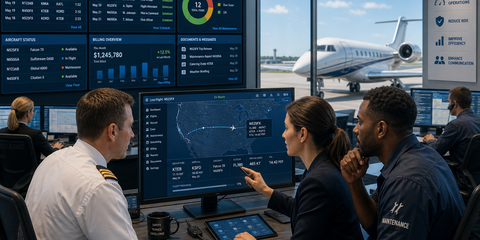
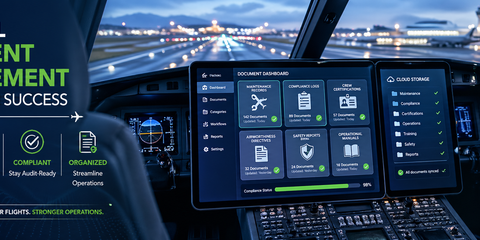
When a flight closes, its times update the aircraft's hours. Those hours move the maintenance countdown. The same legs feed crew duty time and the invoice. The dispatcher, the director of maintenance, the pilot, and the billing person each get a simple view, and all four views are reading the same numbers. That is the idea behind our aviation operations app: flights, crew, aircraft hours, maintenance, and billing in one place.
This is where business process automation actually earns its keep. It is not about replacing people. It is about removing the retyping between the flight log, the tracker, and the bill. Once that record is clean, AI integration has something reliable to read. Flagging an inspection that a new trip would push past becomes part of the workflow. Custom AI development on top of paper sheets and five disconnected apps just produces confident wrong answers faster.
How to find your own split this week
You do not need a vendor demo to test this. Pick one aircraft and one trip from last week.
- Ask how many hours are on the aircraft right now, and when that number was last updated.
- Ask when its next inspection is due, and whether that answer used last week's flights.
- Ask whether the crew on that trip was checked for hours and currency before it was booked, or after.
- Ask how long it takes to pull that aircraft's latest inspection record.
- Ask how the trip's invoice was built, and how many sources it came from.
Write the answers on one page. Wherever two answers disagree, or one answer takes more than a few minutes, that is your first project. Not a platform. One handoff. Honest AI consulting here usually ends with a smaller first step than people expect, and a useful result in weeks.
What is next in this series
Next in the aviation set is the buyer's checklist: what to look for in aviation operations software before you sit through the demo.
If the five questions turned up a gap you already suspected, read how we think about custom aviation scheduling software, or see the GLXY aviation app and book a short call. Bring that one aircraft. We will start there.