Top-Down vs. Bottom-Up Planning in Construction: Choosing the Best Approach for Project Success
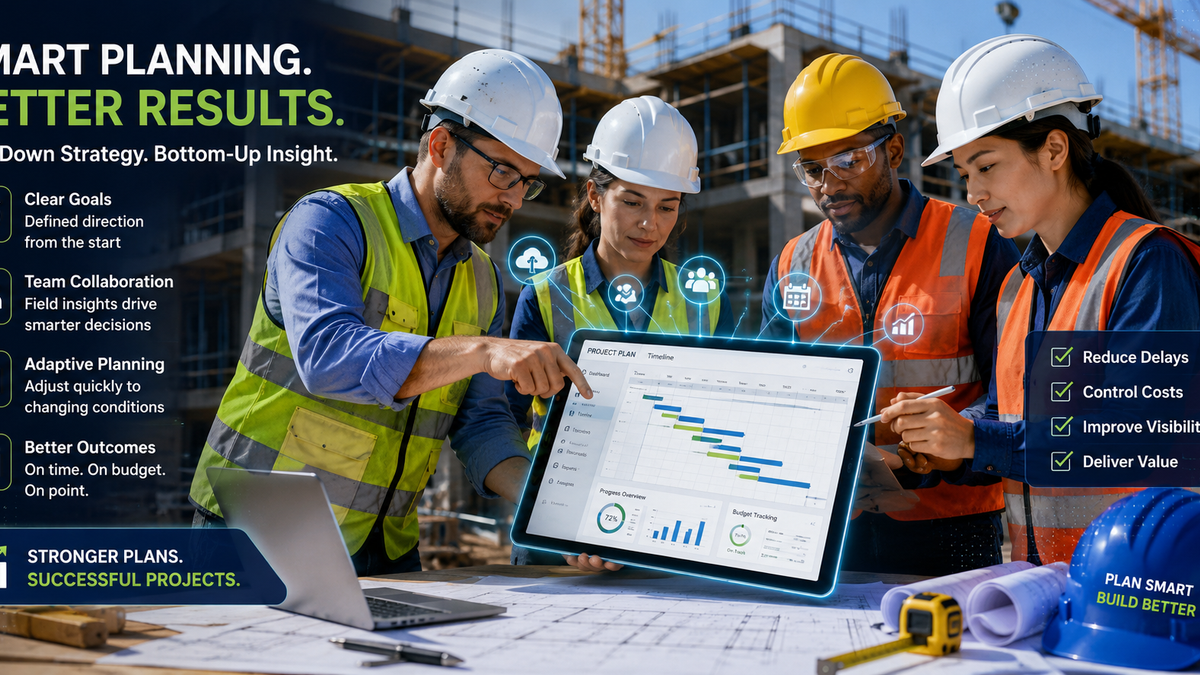
Top-Down vs. Bottom-Up Planning in Construction: Which Approach Delivers Better Project Results?
Successful construction projects don't happen by chance—they're the result of careful planning, effective communication, and the right project management tools. One of the most important decisions a project team makes is choosing the planning approach that best fits the project.
Two of the most common planning methodologies are top-down planning and bottom-up planning. Each offers unique advantages, and understanding when to use each can significantly improve project execution, collaboration, and on-time delivery.
Rather than viewing them as competing approaches, many modern construction companies combine elements of both to create a planning strategy that is structured yet flexible.
Understanding Top-Down Planning
Top-down planning begins with the project's overall objectives. Leadership defines the project's scope, timeline, budget, and major milestones before breaking them into smaller tasks for project managers, contractors, and field teams.
This approach provides a clear roadmap from the beginning of the project.
Advantages of Top-Down Planning
- Clearly defined project goals and expectations
- Better budget and schedule control
- Easier executive oversight
- Consistent project direction
- Simplified reporting and progress tracking
For projects with strict deadlines, regulatory requirements, or fixed budgets, top-down planning often provides the structure needed to keep work moving efficiently.
Potential Challenges
Because planning begins at the executive level, field teams may have limited input during the early planning stages. This can sometimes result in schedules or workflows that don't fully account for on-site realities.
As projects evolve, making adjustments may also require additional approvals, slowing decision-making.
Understanding Bottom-Up Planning
Bottom-up planning takes the opposite approach.
Instead of starting with executive goals, project managers, engineers, subcontractors, and field personnel contribute detailed task estimates, timelines, and resource requirements first. Those individual plans are then combined into an overall project schedule.
This method encourages collaboration and allows the people closest to the work to help shape the project plan.
Advantages of Bottom-Up Planning
- Greater flexibility during project execution
- Better estimates from experienced field personnel
- Increased team engagement
- Improved visibility into operational challenges
- Easier adaptation to changing site conditions
Construction projects frequently encounter unexpected issues such as weather delays, supply chain disruptions, design revisions, or permitting changes. Bottom-up planning makes it easier to adjust without disrupting the entire project.
Potential Challenges
While highly collaborative, bottom-up planning can take longer during the planning phase. Gathering detailed input from multiple teams requires additional coordination, and without strong project leadership, priorities can become inconsistent.
Which Planning Method Do Most Construction Companies Use?
Today, many successful construction firms use a hybrid planning approach.
Leadership establishes overall project objectives, budgets, and milestones while project managers and field teams contribute operational details that improve execution.
This balance combines strategic direction with practical experience, creating plans that are both realistic and adaptable.
Modern project management platforms make this collaborative approach much easier by allowing everyone to work from a centralized source of information.
Why Communication Is Just as Important as Planning
Even the best project plan can fail without effective communication.
Construction projects involve multiple stakeholders, including:
- Owners
- Project managers
- Architects
- Engineers
- General contractors
- Subcontractors
- Vendors
- Field personnel
When information is scattered across emails, spreadsheets, and paper documents, teams can quickly lose visibility into project progress.
Centralized project management systems help ensure everyone works from the same information, reducing misunderstandings and improving collaboration.
GLXY Software Solutions offers construction project management solutions designed to improve visibility, coordination, and communication across every stage of a construction project.
Construction Project Management Solutions:
Learn more about Construction Project Management Solutions
For organizations that need stronger task tracking and operational visibility across multiple projects, GLXY also provides Pulse Point Project Tracker, a centralized platform for monitoring workflows, assigning responsibilities, and tracking project progress.
Pulse Point Project Tracker:
Explore Pulse Point Project Tracker
How Technology Improves Project Planning
Modern construction software helps bridge the gap between top-down and bottom-up planning by providing real-time visibility into every phase of a project.
Instead of relying on disconnected tools, project teams can:
- Track schedules in real time
- Assign and monitor tasks
- Share project updates instantly
- Maintain centralized project documentation
- Improve communication between office and field teams
- Identify potential issues before they become major problems
This level of visibility allows managers to make informed decisions while keeping every stakeholder aligned.
Choosing the Right Planning Approach
The right planning methodology depends on several factors, including:
Project Complexity
Large commercial projects often benefit from structured top-down planning, while smaller or rapidly changing projects may require greater flexibility.
Budget Requirements
Projects with fixed budgets generally require stronger executive oversight and milestone tracking.
Team Structure
Organizations with experienced project teams often gain significant value from incorporating bottom-up planning into their workflow.
Client Expectations
Some projects require frequent adjustments throughout construction, making collaborative planning especially valuable.
Best Practices for Successful Construction Planning
Whether your organization uses top-down planning, bottom-up planning, or a combination of both, these best practices can improve project outcomes:
- Define project goals before work begins.
- Break large milestones into manageable tasks.
- Establish clear communication channels.
- Track project progress continuously.
- Review risks throughout the project lifecycle.
- Keep documentation centralized and up to date.
- Use project management software to improve visibility and accountability.
Why Many Organizations Combine Both Methods
Rather than choosing one planning methodology exclusively, many construction companies combine both approaches.
Leadership establishes strategic direction, while project teams provide operational expertise throughout execution.
This collaborative approach helps organizations:
- Improve project visibility
- Reduce scheduling conflicts
- Respond more quickly to change
- Increase accountability
- Deliver projects more efficiently
When supported by the right technology, combining top-down planning with bottom-up collaboration often produces the best results.
Final Thoughts
There is no single planning methodology that fits every construction project. The most successful organizations understand the strengths of both top-down and bottom-up planning and apply them where they provide the greatest value.
More importantly, successful planning depends on having systems that support collaboration, communication, and real-time project visibility.
GLXY Software Solutions helps construction organizations improve project coordination through centralized project management and workflow solutions designed to keep teams connected, tasks organized, and projects moving forward.
Learn more about GLXY's construction solutions:
Explore Construction Project Management Solutions
Explore Pulse Point Project Tracker:
Learn more about Pulse Point Project Tracker