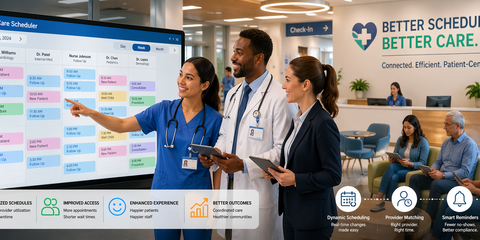
Transforming Healthcare: The Power of Smart Scheduling
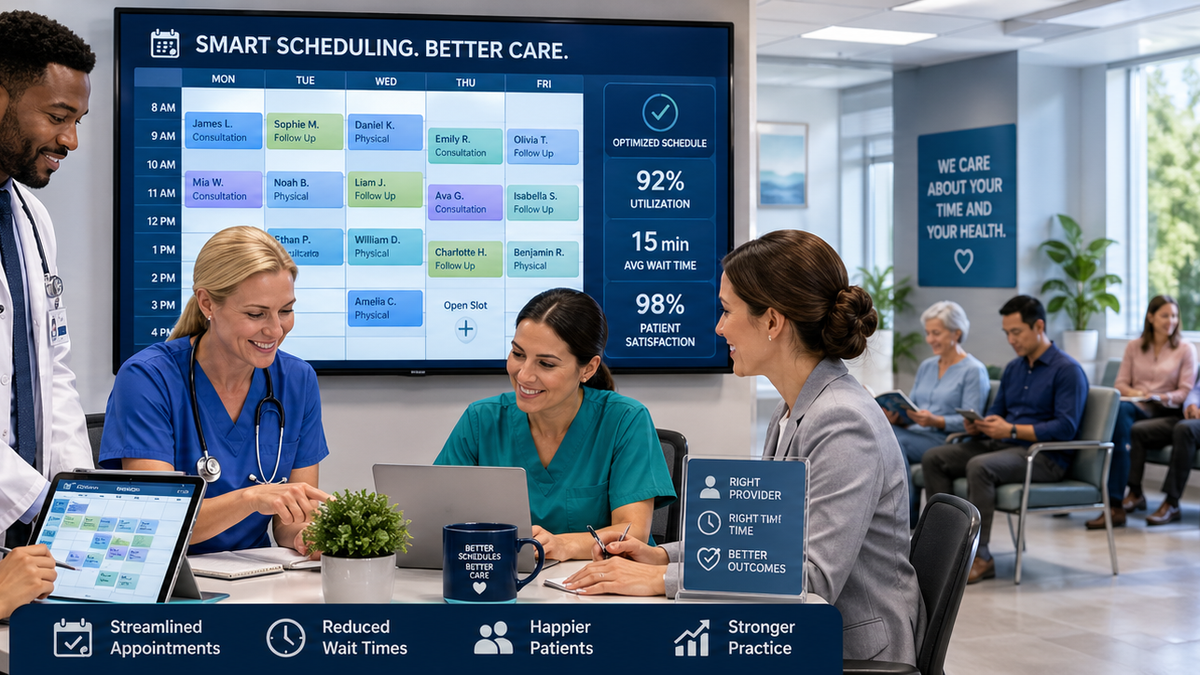
The Critical Role of Scheduling in Modern Healthcare Operations
In today’s healthcare environment, patient scheduling is no longer just a front-desk function—it is a core operational system that directly impacts efficiency, patient experience, and overall clinic performance.
As clinics handle increasing patient volumes and more complex care coordination, scheduling becomes a central factor in ensuring that operations run smoothly. Without structured systems in place, even small scheduling inefficiencies can quickly escalate into larger operational challenges.
Common Scheduling Challenges in Healthcare Clinics
Many clinics still rely on manual processes or fragmented systems to manage appointments. This often leads to recurring issues such as:
- Double bookings and overlapping appointments
- Long patient wait times and delays
- High rates of missed appointments or last-minute cancellations
- Poor visibility into provider availability
- Inefficient coordination between administrative staff and clinical teams
These challenges can disrupt daily workflows, reduce staff productivity, and negatively impact patient satisfaction.
Why Traditional Scheduling Methods Fall Short
Traditional scheduling approaches often lack the flexibility and structure needed to support modern healthcare operations. As clinics grow, the complexity of managing multiple providers, treatment types, and patient needs increases.
Without centralized systems, clinics may struggle to:
- Adjust schedules in real time
- Coordinate across multiple departments
- Track recurring or long-term patient appointments
- Maintain consistency in patient communication
This leads to inefficiencies that affect both operational performance and quality of care.
The Role of Structured Scheduling Systems in Healthcare
To address these challenges, healthcare organizations are increasingly adopting structured scheduling systems that centralize and automate appointment management.
GLXY Software Solutions provides clinical scheduling systems designed specifically for healthcare environments, helping clinics streamline workflows and improve coordination:
https://www.glxysoftwaresolutions.com/healthcare/clinical-scheduling
These systems are built to support:
- Centralized appointment scheduling across providers and departments
- Automated booking processes and updates
- Improved visibility into provider availability
- Better coordination between administrative and clinical teams
Improving Operational Efficiency
Structured scheduling systems help clinics operate more efficiently by reducing the reliance on manual processes. With better organization and automation, clinics can:
- Minimize scheduling errors and conflicts
- Reduce administrative workload
- Improve staff productivity
- Ensure smoother daily operations
This allows healthcare providers to focus more on delivering quality care rather than managing logistics.
Enhancing Patient Flow and Reducing Wait Times
Efficient scheduling plays a major role in managing patient flow. When appointments are properly organized, clinics can:
- Reduce bottlenecks in patient intake and treatment
- Maintain a steady and predictable workflow
- Decrease patient waiting times
- Improve overall clinic throughput
This creates a more organized and less stressful environment for both patients and staff.
Improving Patient Experience and Satisfaction
Patient experience is closely tied to how smoothly a clinic operates. Scheduling inefficiencies can lead to frustration, confusion, and missed care opportunities.
With structured scheduling systems, clinics can:
- Provide clearer and more reliable appointment booking
- Send automated reminders to reduce no-shows
- Improve communication with patients
- Deliver a more consistent and professional experience
These improvements contribute to higher patient satisfaction and stronger long-term relationships.
Supporting Better Resource Utilization
Healthcare providers must carefully manage limited resources, including staff time, treatment rooms, and equipment. Structured scheduling systems help optimize these resources by:
- Aligning appointments with provider availability
- Preventing overbooking or underutilization
- Balancing workloads across teams
- Maximizing the use of clinic capacity
This leads to more efficient operations and better overall performance.
Enabling Scalable Healthcare Operations
As clinics grow, their scheduling needs become more complex. Structured systems provide the scalability required to support:
- Increasing patient volumes
- Multi-provider coordination
- Expansion into multiple locations
- More complex scheduling workflows
By adopting flexible and scalable solutions, clinics can continue to grow without sacrificing efficiency.
Conclusion
Smart patient scheduling is a foundational element of successful healthcare operations. Without structured systems, clinics risk inefficiencies that impact both patient care and operational performance.
By implementing structured scheduling solutions like those provided by GLXY Software Solutions, healthcare organizations can streamline workflows, improve patient experience, and build a more efficient and scalable operation.
In an increasingly demanding healthcare environment, effective scheduling is not just beneficial—it is essential for long-term success.